
In a culture of productivity, Reiki asks us to slow down
Rooted in Japanese folk tradition, Reiki is the practice of moving energy through touch and presence.

In my 25 years of teaching Reiki as a practice, I have come to deeply appreciate how, at its core, Reiki supports people to slow down and receive care and nurturing, a much-needed experience in our culture of individualism and productivity.
It is often a portal to deeper exploration of spirituality, which brings people great meaning and purpose. Reiki was a catalyst in my life at a time when I was ill, and it brought me not only healing, but set me on a path of exploration that led to deep study of mysticism, science and physiology, philosophy, folk medicine, and somatic trauma renegotiation.
Life is inherently challenging; everyone has experienced suffering. Pain, illness, oppression, and trauma are all experiences which can leave lasting impacts on a person’s physical body and psyche. Often these life events make our lives smaller.
When we seek to process our past and connect to what feels most like ourselves, we open ourselves to life and feel the pulse of aliveness. This can lead to deep, secure attachments in our relationships and a sense of belonging not only to our community but also to something greater. When people settle, they breathe more easily, inhabit their bodies spaciously, and move with grace.
What is Reiki
Rooted in Japanese folk tradition, Reiki is the practice of moving energy through touch and presence. The word Reiki means universal (rei) life force energy (ki). Energy is the animating force of consciousness; it is vitality. We experience this energy through our embodiment.
Your process of embodiment began at the moment of your conception and will continue until the moment you die. It is unique to each person, as your body and its processes are shaped by your genes, culture, time, place, and history.
Essentially, being embodied cultivates coherence and compassion in ourselves and in others. Both are felt in ourselves as well-being, grounding, and joy.
Reiki as a healing practice aims to bring all facets of a person’s system: energetic, nervous system, mental, emotional, physical and spiritual into balance and harmony. When a person’s systems are balanced, they are well in mind, body, and spirit. Balance does not mean all things equal, but rather that there is coherence and flow throughout all aspects of a person.
The energy is neither positive nor negative, but a support and resource for the receiving system to use in whatever way is required for healing. Compatible with all beliefs, Reiki as practiced today is not based in religious tradition, though its practice is shaped by history and culture. Most commonly, treatments are given lying down on a table in a quiet, comfortable place and may include soothing touch, invitations into visualizations, conversation, or contemplative silence.
How to choose a Reiki practitioner
When choosing a Reiki practitioner, it is important to seek out individuals trained in trauma-informed care.
Reiki is not a regulated profession, so we must be discerning about who we invite into our deepest, most vulnerable parts. Consent and feeling safe and seen are a crucial part of the healing process. Working with more than one practitioner is also a great way to build a web of support for ourselves, since different practitioners will work in their own way, each bringing a unique perspective to the healing process.
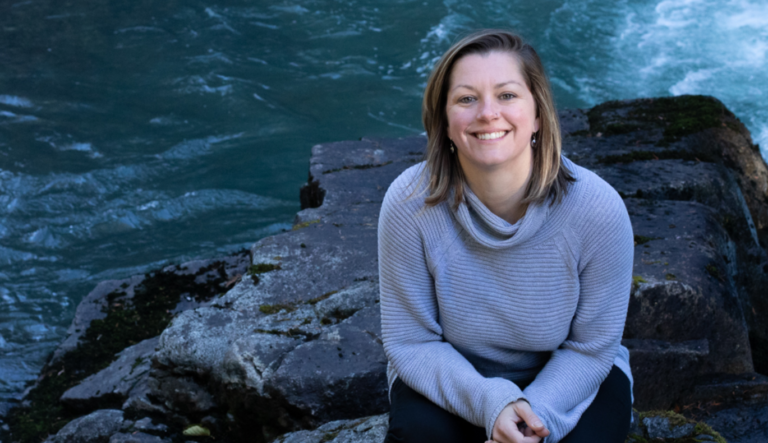
Erica Otto is a Reiki Teacher, Somatic Experiencing Practitioner, and Kinesiologist. She draws deeply on her experience as a mother, artist, dancer, wise woman, and intuitive. At her core, she is a transformer, taking people’s experiences of pain and disease and helping them remould them into healing, freeing their energy for connection and creativity. She is witchy and a radical; she loves rules, only to be rebellious and break them. Her work is very playful. Transformation initiated through relationships and art experiences is her “raison d’être”. She lives in Squamish, BC.



Comments
Note: Sea to Sky Healer welcomes your opinions and comments. We do not allow personal attacks, offensive language or unsubstantiated allegations. We reserve the right to edit comments for length, style, legality and taste.