
What nearly dying at 19 has taught me about living
The near-fatal accident changed Squamish counsellor's understanding of healing, resilience and service.
On April 17, 2004, I was given approximately 15 minutes to live. On April 17, 2005, I ran my first 10 km race.
I was 19 when I was involved in a Sea-Doo accident in Cancun, Mexico. I hit an unmarked dock in the ocean while going as fast as I could through the waves.
I broke my pelvis and was bleeding internally. My friend, who I had travelled with, paid the general hospital whatever money she had and had me transferred to a private hospital. Upon arrival, I was told I had approximately 15 minutes left to live.
Before the accident, I was living what I would describe as a carefree life. I had that feeling many young people have that life is ahead of you, that there are endless possibilities and that somehow you are invincible. I certainly wasn’t thinking about mortality or how quickly life could change.
Learning to Walk Again
I survived, but I couldn’t walk for months.
My friends washing my hair in a bowl as I lay on the bed is a memory I will never forget. On Sundays, my dad would take me in my wheelchair to Safeway to get a sandwich. Outside, I watched other people go about their lives as they walked.
Going to the bathroom by myself was something I struggled with. It was so vulnerable to have to ask for help. It wasn’t simply about not being able to walk. It was about feeling disconnected from the person I had been before. I cried a lot during this time and felt guilt for the accident and for drinking and driving a Sea-Doo. My inner thoughts were destructive. I would tell myself I hated myself, hated my body and didn’t deserve to live.
I distracted myself by watching television shows rather than trying to understand or work through my thoughts and feelings. I think I expected that I should somehow just get over it because I had survived. But surviving something doesn’t automatically mean you know how to live with it emotionally.
Looking back, I think I was grieving the person I had been before the accident. I was trying to get back to that version of myself rather than understanding that I was going to become someone different. Seeking counselling became an important part of my healing. I began to understand that I couldn’t simply distract myself from what I was experiencing. I needed to make sense of it.
Through counselling, I started to understand that my thoughts and feelings weren’t necessarily facts. I could begin to challenge the stories I had developed about myself. I started to recognize that I was more than the accident, more than my injuries and more than the fear and shame I was carrying.
My therapist once asked, “Do you feel this accident happened for a reason?” I was frustrated and couldn’t imagine that it did.
Later, I saw the meaning as a reminder of life’s impermanence. I had survived, and I wanted to give back and help others.
I also had to begin to trust myself again. The first time I walked independently, after the supports had been taken out of my pelvis, I cried. My brain still thought my pelvis was broken. People around me let me feel the fear and do it anyway. My sister was there cheering me on.
A Different Finish Line
Then, on a typical rainy Vancouver day, I came across an article about a 10 km race.
I had spent months recovering from a broken pelvis and learning to walk again. I was still navigating fear, guilt and shame, and trying to understand who I was after such a life-changing experience.
When I told people I was thinking about doing it, they expressed concern that I might hurt myself. I understand that some of that came from wanting to protect me, but I had reached a point where I needed to discover what might be possible.
I didn’t want fear to make all my decisions for me.
It wasn’t necessarily that I suddenly believed I could run 10 kilometres. For the first time in a while, I could imagine doing something that represented a future beyond my accident.
There were moments of doubt. Counselling helped me understand that I didn’t have to have everything figured out. I could take steps forward, experience setbacks and still be moving towards something meaningful.
Looking back, the greatest accomplishment wasn’t simply getting physically ready for the race. It was beginning to trust myself again and feel my heartbeat, my strong legs and my feet.
On April 17, 2005, I stood at the starting line of the Vancouver Sun Run.
I remember crying. I was completely overwhelmed with emotion. A man came up to me and said something along the lines of not to worry, that it wasn’t a hard race. He had no idea what that moment represented for me.
Exactly one year earlier, I had been lying in a hospital bed with a broken pelvis, bleeding internally, with approximately 15 minutes left to live. I completed my first 10 km race exactly one year after the accident. I was celebrating being alive. That day taught me something I have carried with me ever since: sometimes we have no idea what someone else has overcome just to show up.
There were still times afterwards when I struggled with negative self-talk, relationships and feeling comfortable in my own skin. Over time, I began to understand the importance of the people I surrounded myself with. Some relationships helped me feel safe and supported, while others could leave me feeling disconnected from myself.
Counselling was an important part of that process. So was learning to be kinder to myself and recognizing that healing takes time.
I began to understand that healing wasn’t about becoming the person I had been before the accident. It was about integrating my experiences into who I was becoming.
That experience eventually influenced my decision to pursue counselling and graduate studies. During my graduate education, I completed a four-month social justice practicum in India, working with a women’s empowerment group in Udaipur, Rajasthan.
I learned a great deal about the importance of community, women’s voices, access to resources, and approaching social justice work with humility. It reinforced the importance of listening, supporting autonomy and recognizing the strength that already exists within individuals and communities.
I also developed a deeper appreciation for seva, or selfless service. To me, it is about contributing without expecting recognition or something in return. I carry that philosophy into my counselling practice in Squamish. I don’t believe I need to have all the answers for someone. I believe in creating a space where people can discover their own.
Today, healing looks much less like achieving something extraordinary and much more like appreciating ordinary life. It looks like spending time with people I love, getting outside on the trails in Squamish with my dog, Faith, connecting with my community and being present for the life I have created.
I often think about the distance between those two April days. It wasn’t just the physical distance of learning to walk and eventually run again. It was the emotional distance between fear and possibility, between feeling disconnected from myself and learning to trust myself again.
I could never have imagined at 19 that this experience would lead me to become a counsellor, pursue social justice work, spend time working with women in India and build a counselling practice in Squamish.
I nearly lost my life at 19. Today, I feel both the privilege and responsibility of using the life I was given to help others find hope, connection and possibility in their own lives.
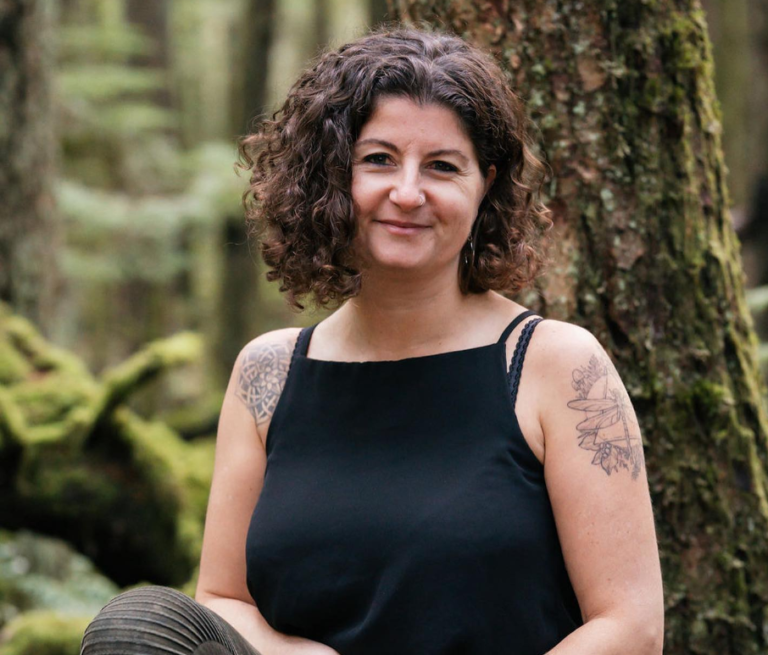
Danielle Buchanan is a Registered Clinical Counsellor and founder of Shifting Narratives Counselling in Squamish, BC. She is also a Certified Professional Coach and offers Neurofeedback in Squamish and Whistler.
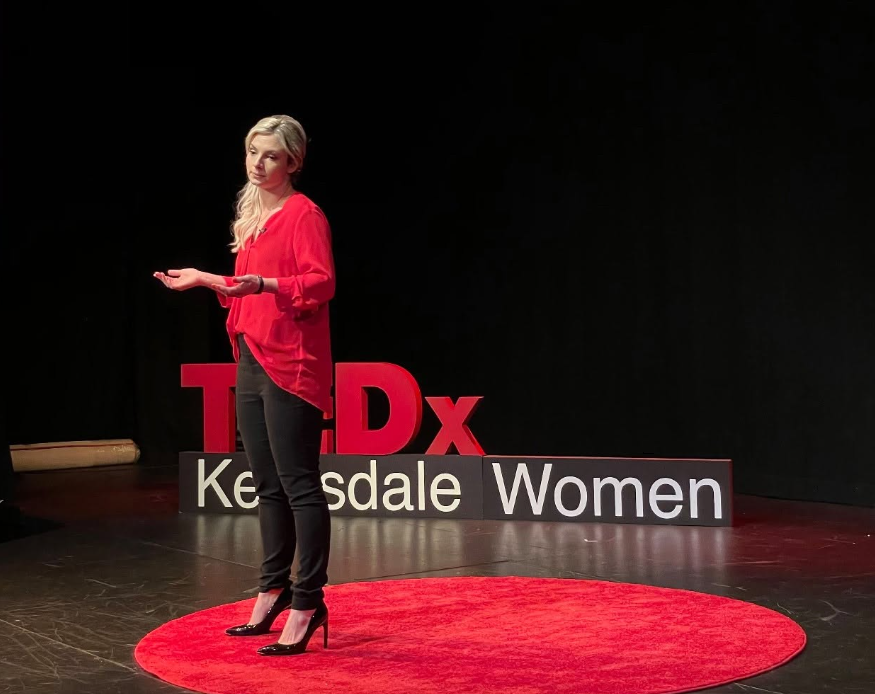
Drawing on her professional expertise and her own lived experience of trauma, loss, and resilience, Danielle is passionate about helping people navigate life’s challenges and discover new possibilities for healing and growth. Her TEDx talk, Stopping the Clock on Fear, reflects her belief in the power of shifting our narratives, embracing vulnerability, and finding hope beyond our experiences. Danielle believes our past shapes us, but it does not have to define us.
Comments
Note: Sea to Sky Healer welcomes your opinions and comments. We do not allow personal attacks, offensive language or unsubstantiated allegations. We reserve the right to edit comments for length, style, legality and taste.